Brexa is an all-in-one CRM and workflow automation platform built to help small and mid-sized businesses scale without juggling multiple tools.
How it helps
It is a B2B and B2B2C platform that unifies the business operations into a single, powerful platform that grows with them. Stop juggling between disconnected tools and start executing with precision.
Brexa users
Small scale businesses, startups, freelancers & agents, Local shops and e-commerce sellers needing an affordable all-in-one solution.
Small and medium businesses often rely on multiple disconnected platforms for CRM, email marketing, workflow automation, online stores, chatbots, and omnichannel support.
The two key issues
The opportunity for brexa
Create a unified platform that is intuitive, scalable, and cost-effective.

Brexa's unified design eliminated the fragmented workflows that were costing teams hours daily. By consolidating communication channels, automation tools, and CRM data into one coherent system, we measurably improved both operational efficiency and business outcomes.
Time Saved
Nearly a Full Workday Saved Weekly
41%
More Deals Closed
Pipeline Efficiency
Sales team closed more deals

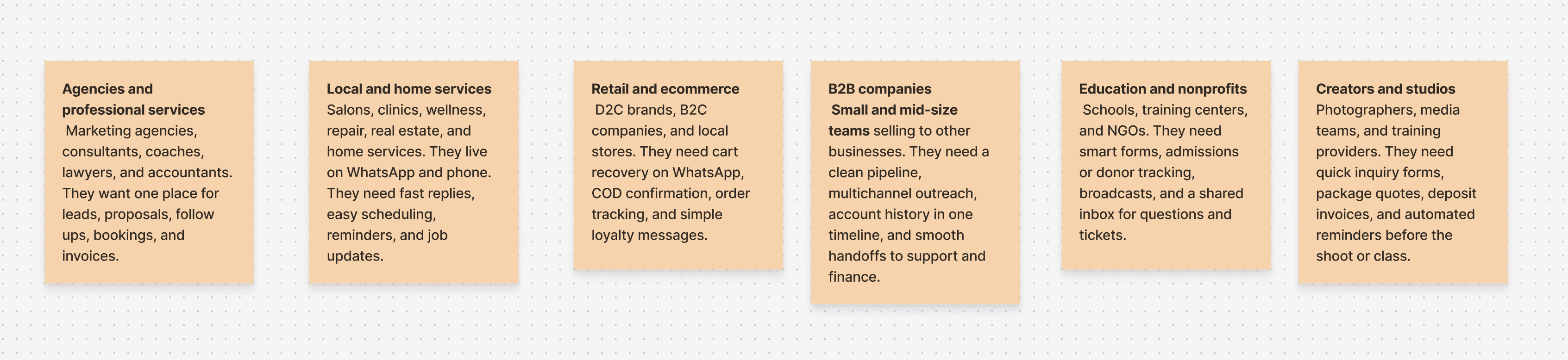
We defined 4 key segments
Small business needs
Local shops and e-commerce sellers needing an affordable all-in-one solution.
Startups
Early-stage teams looking to automate growth without heavy developer resources.
Agencies & freelancers
Managing multiple clients’ campaigns and pipelines, needing efficiency.
SMB teams
Sales, support, and marketing teams needing shared workflows and omnichannel support.
56% frustrated by tool-switching - scattered conversations across platforms created anxiety about dropped leads, not just inefficiency.
37% paid for unused features - taught me to design progressive disclosure with core workflows upfront, advanced features contextual.
"One place to do it all" meant unified experience - users wanted consistent patterns, not separate tools crammed into one dashboard.
1

Visual mapping exposes connection gaps - mapping customer story showed we had email + tasks + WhatsApp but no unified timeline stitching them together.
Non-technical users need visual patterns - drag-and-drop builders and templates weren't optional, they were the only way users would adopt automation without coding.
Problem reframing unlocks solutions - "Answer leads in <5 minutes?" revealed auto-greet, smart routing, unified notifications vs. building literal feature requests.
2

Competitive gaps = positioning opportunities - HubSpot's complexity and Pipedrive's upselling showed where Brexa could win: simplified onboarding, transparent pricing, consistent design.
Recurring failures became design principles - paywalled features, overwhelming dashboards, opaque AI across 6+ CRMs translated to: progressive disclosure, clear hierarchy, transparent automation.
"Borrow vs Avoid" framework - kept analysis actionable: adopt Intercom's chat-first and Monday's visual boards; skip Zendesk's clutter and HubSpot's overload.
Collaboration exposed blind spots - Naveen caught gaps I missed; my "feature opportunity" was sometimes an intentional engineering tradeoff.
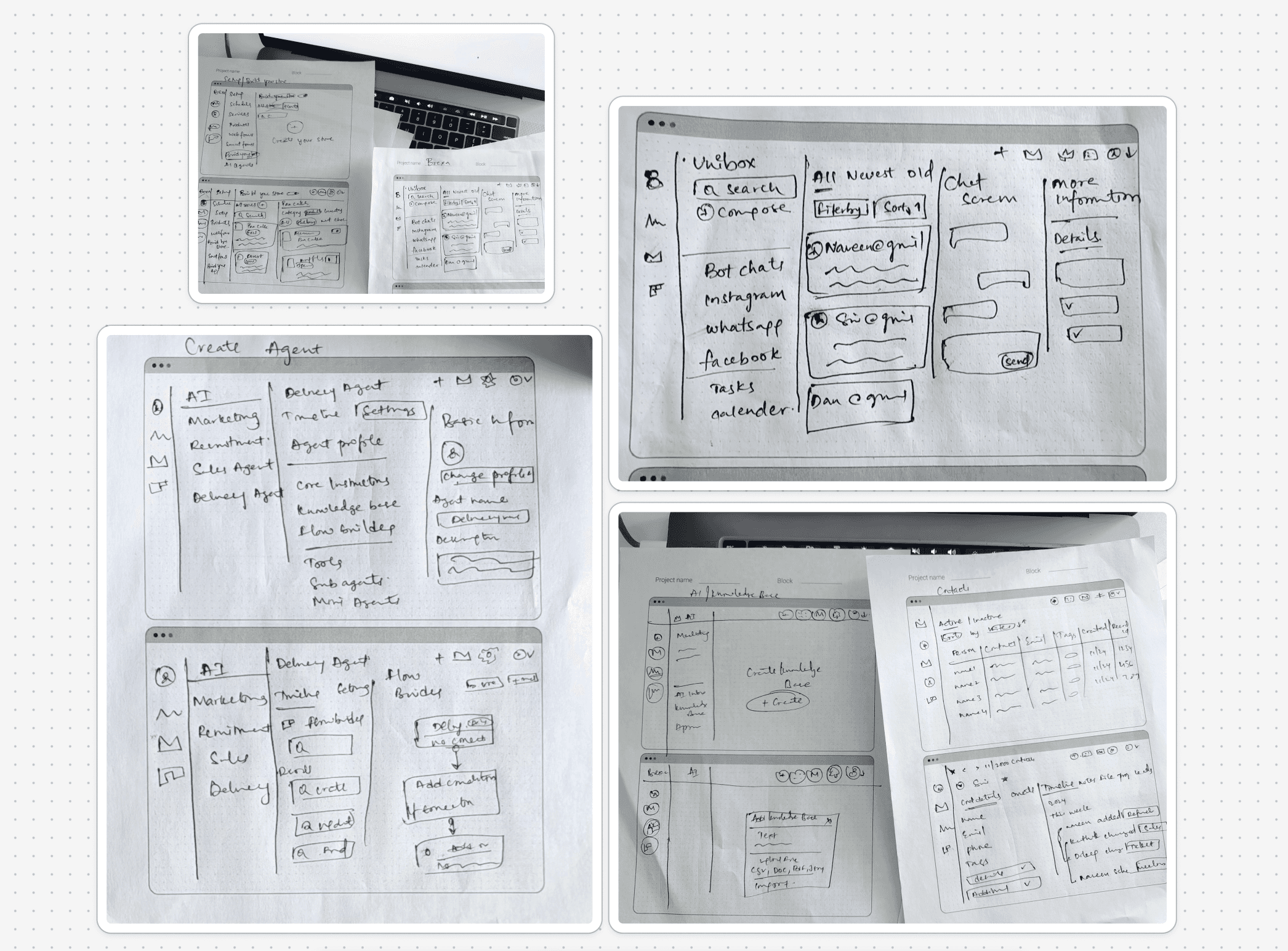
This section was all about switching myself to creative mode. I started sketching interfaces and tried various iterations to diverge myself to all set of possibilities and finally decided to stick with these.
This helped me to visualise the early stages of app. It also helped me to define the layout and structure.
3

4

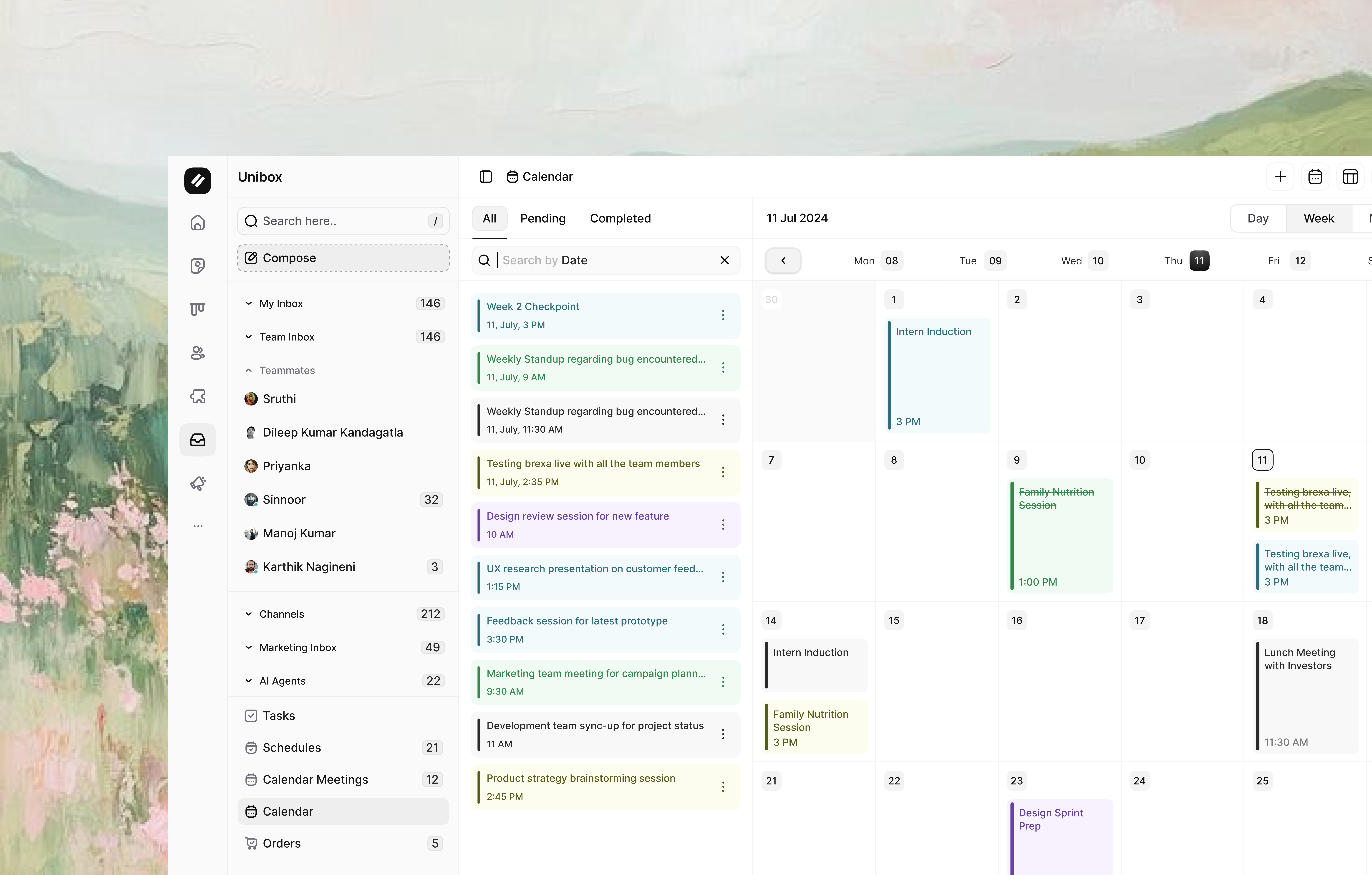
Designing Brexa was like designing 6 products in one: CRM, marketing, automation, chat, store, and analytics.
How solved this

Small and mid-size teams were wasting hours switching between email, WhatsApp, spreadsheets, and chat apps just to keep up with customers.


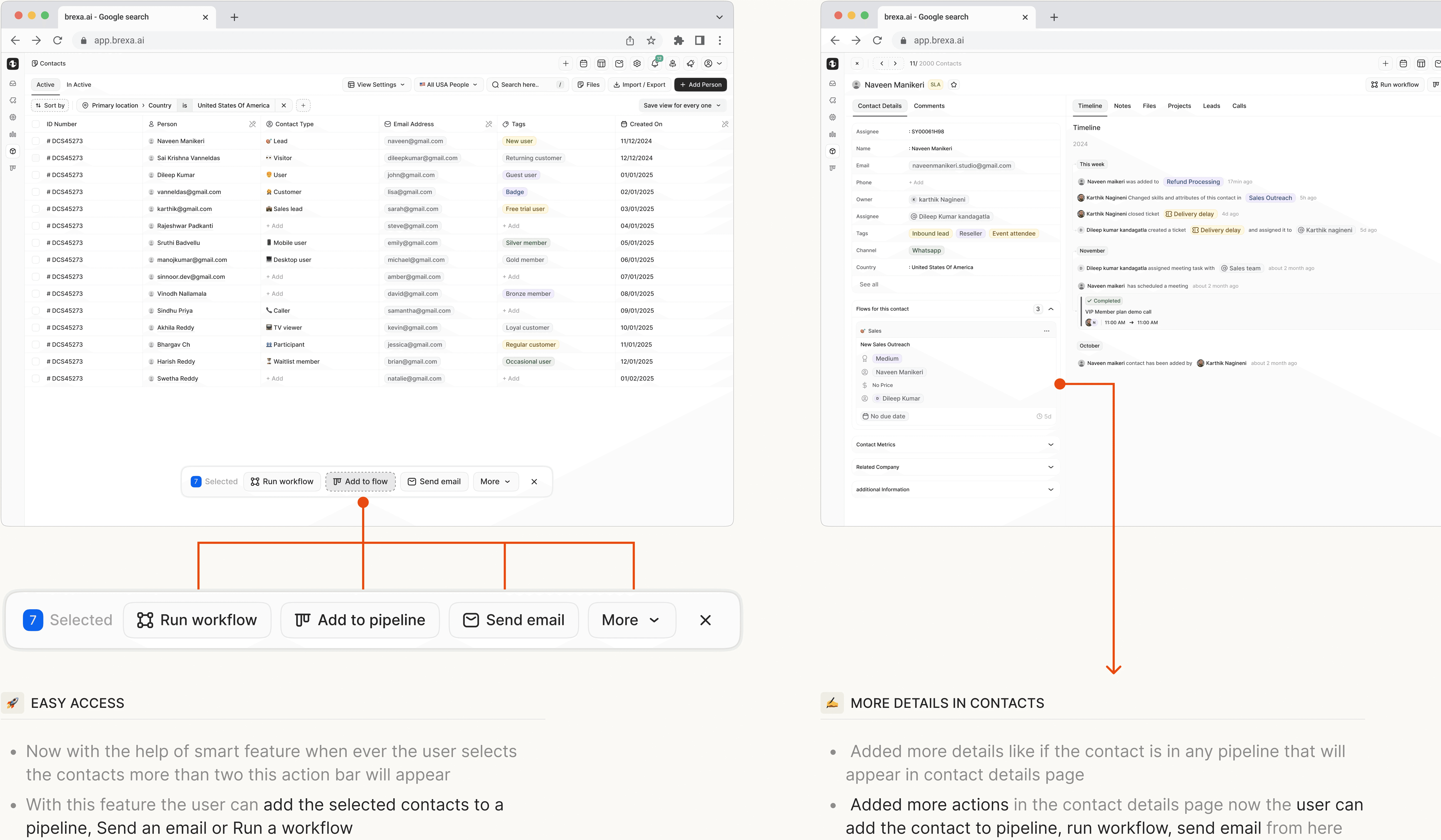
Brexa consolidates fragmented workflows into a unified interface. The design prioritizes clarity through consistent information hierarchy, role-based views, and contextual actions that surface at the right moment.


| Detailed user flows and interaction documentation available upon request due to file size.
As Brexa evolved, I led design efforts on advanced modules that extended the platform's core capabilities. Each feature required balancing flexibility for diverse business needs with maintaining the consistent, intuitive experience users expected.

Custom Pipelines
Worked on custom pipelines where the businesses can adapt and create pipeline according to their business needs.

AI chatbot
Worked on custom pipelines where the businesses can adapt and create pipeline according to their business needs.

Unibox
Worked on custom pipelines where the businesses can adapt and create pipeline according to their business needs.

Omni-Channel
Worked on custom pipelines where the businesses can adapt and create pipeline according to their business needs.

Automations
Worked on custom pipelines where the businesses can adapt and create pipeline according to their business needs.
Working at Brexa was a monumental moment in my early career and I couldn’t have been fortunate enough to have worked with talented folks that elevated each other’s crafts, while positively impacting business and customers across Brexa.
Strategically designing for both business and user needs
During my time, project priorities shifted, which required me to reevaluate my approach to new projects based on available time and resources. Learning to strategize both immediate MVP solutions and long-term roadmap planning proved invaluable.
Impact of rapid prototyping and presentation
Prototyping has always been a key strength of mine, and collaborating with product and engineering teams has truly highlighted its impact. It helped me identify blind spots and accelerate decision-making within my team.
Inspiration through ownership and craft
I have always been a proponent for design craft and impact. But, my experience at Brexa highlighted the true impact of craft and ownership through the people leading these experiences and their impact across business and customers. It was an inspirational moment to witness in my career.
Beyond product design, I created marketing assets that communicated Brexa's value across different use cases and channels. These designs needed to work as standalone social media posts, ad creatives, and landing page elements.